>50% of all AI usage is code. We manage that line.
Selan shows who spends what across every AI account and model, caps what they can spend, and stops secrets before they reach the provider.
Free for up to 3 seats · no card
Every dollar has a name.
See who ran what, on which account, at what cost. Limits follow the person, not the key: by day, week or month.
Learn more →One sign-in. Every model.
Claude, GPT, Kimi and whatever ships next, in the same tools your team already uses. One budget across all of it.
Learn more →Secrets never reach the provider.
Selan sits between your team and the provider. Keys and credentials are replaced in flight, so the provider never sees them.
Learn more → Also from Selan
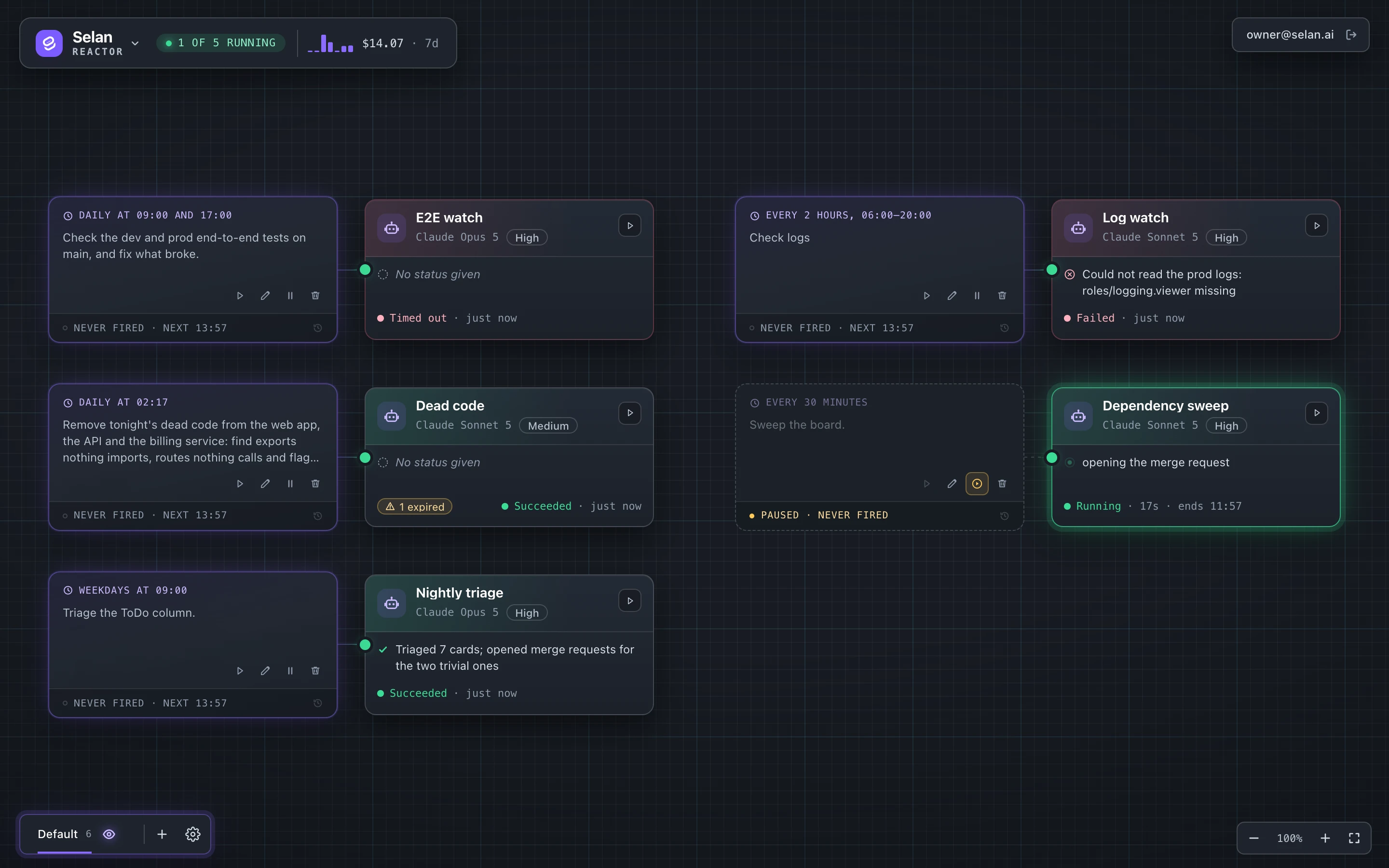
Reactor: micro agents that maintain and build your system while you sleep.
Each agent does one job overnight and leaves a merge request for the morning. Their model calls go through Selan like everyone else's.
What is your team trying to do?
-
How do we control Claude Code spend per developer?
Every Claude Code, Codex and Claude Desktop request is recorded with who ran it and what it cost, and a spending limit per person holds by day, week or month.
Spend per developer Usage per developer, the manual ways Max plan or API
-
How does the whole team get every model behind one sign-in?
Add the accounts you already pay for once, and everybody signs in as themselves to the models you allow, in Claude Code, Codex and Claude Desktop.
Every model, one setup Providers and models Codex on company accounts
-
How do we keep provider keys and secrets off laptops?
The provider keys stay on the gateway and a laptop holds only a session token you can revoke; with scanning on, recognised secrets are swapped out before a request leaves.
No API keys on laptops Secrets stopped in flight How redaction works
-
How do we roll skills and plugins out to the team?
An owner switches a plugin marketplace on once and its skills, commands and agents appear for every developer's Claude, including plugins added to it later.
Running in three commands.
One binary. macOS, Linux, Windows.
Google or Microsoft sign-in. A revocable session token lands on the machine.
Claude Code runs exactly as it always did. selan codex does the same for Codex; Claude Desktop takes a settings file instead.
Every dollar has a name.
- Add the accounts you already own: Claude, GPT, Vertex, OpenRouter, nexos.ai.
- Every request goes to the right account, logged with who ran it.
- Limits follow the person, not the key: by day, week or month.
- Spend against your cloud commit. Vertex bills to your own account.

One sign-in. Every model.
- All models from your Claude CLI / Codex, under
/model. - Agents work with any provider's model, without changing the interface.
- Test any new model on the same interface, whoever releases it.
- When one provider is down, the accounts you've added keep serving.
Secrets never reach the provider.
- A company switch, off until an owner turns it on. From then, every request body is swept before it leaves.
- Gitleaks’ own rule set: 215 rules, matched and replaced in flight.
- The feed shows who leaked what, and when it was redacted.
Shipped lately.

A ceiling on reasoning effort, per model maker
Claude Opus 5.5 at max effort can cost nine times what it costs at medium. An owner can now cap the effort for each model maker, and Logs show the effort each request ran at, where it named one.
Max effort Read more →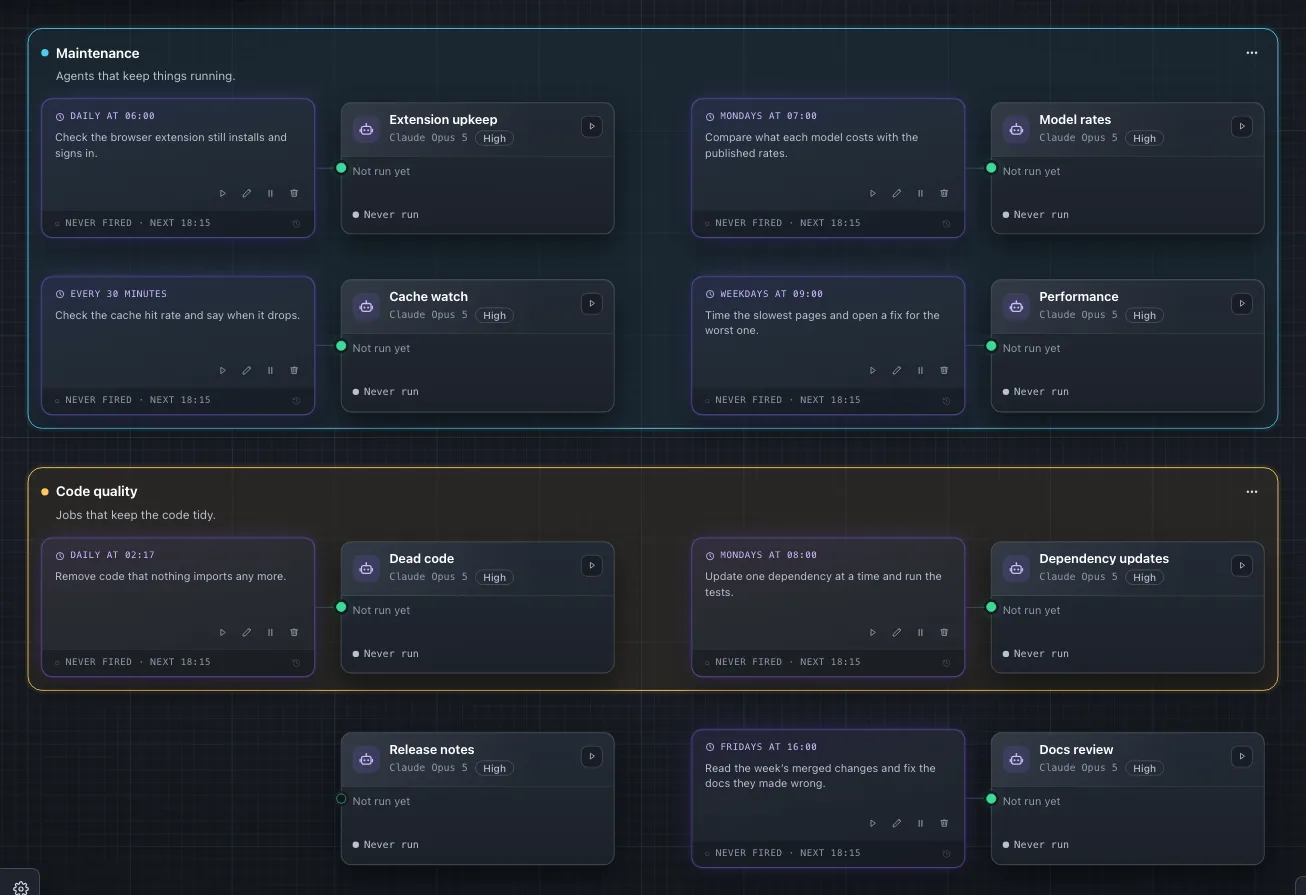
Agent groups: sort the Reactor canvas by the job each agent does
Put a workspace's agents in coloured boxes, one per job, by dragging their cards or by asking Claude through Selan MCP, so a canvas of twenty agents is no longer a wall of cards.
Agent groups Read more →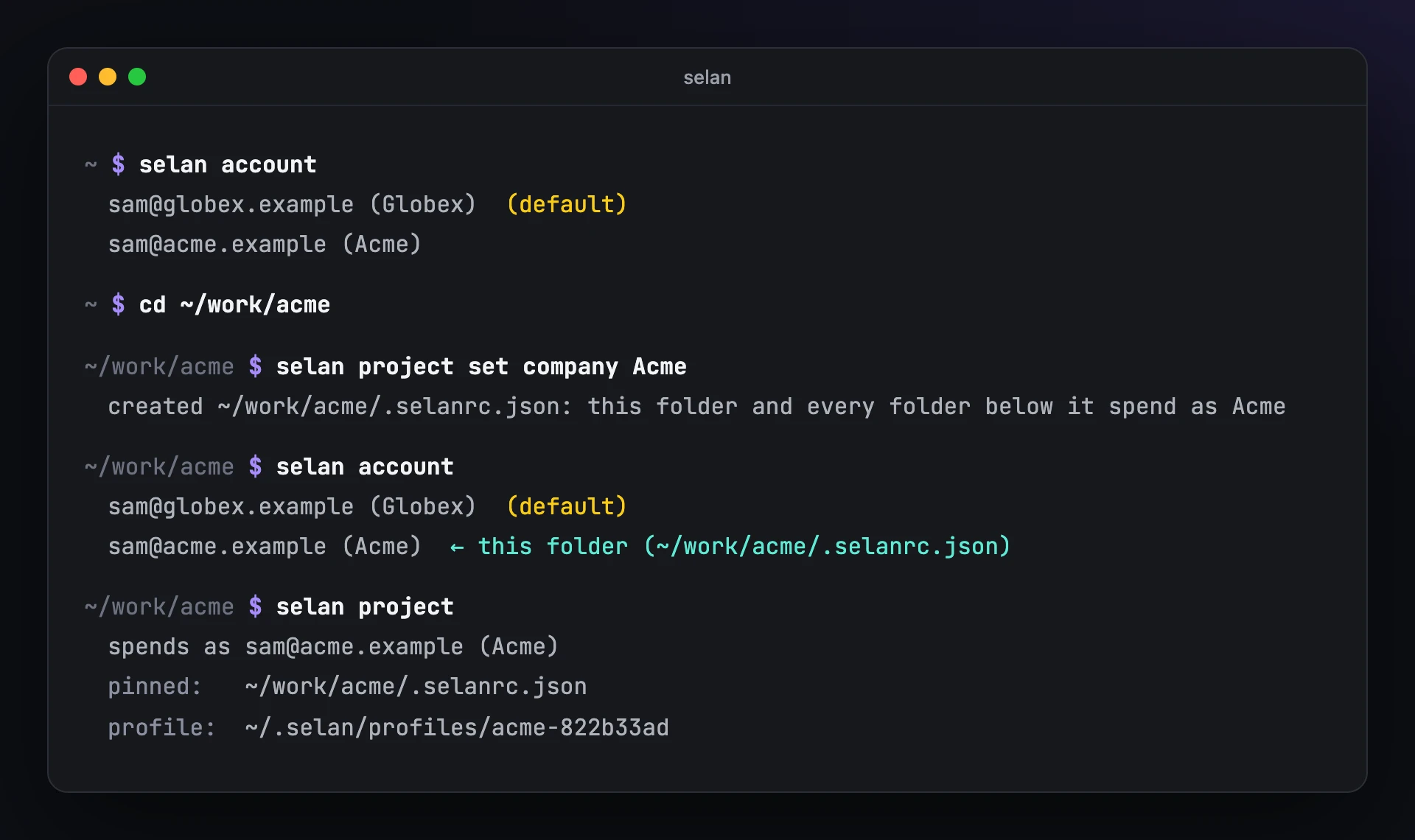
One laptop, several companies: accounts in the Selan CLI
Stay signed in to every company you work for, and let a folder decide which one a Claude Code session spends as. Switching no longer means signing in again.
Selan CLI Read more →Questions teams ask.
What does Selan cost?
Do developers have to change how they work?
selan claude instead of claude, and selan codex instead of codex; every flag and argument passes through unchanged. Claude Desktop imports one settings file and needs no command at all.Can I use models other than Claude?
/model picker, and any model your provider serves can be named with --model provider:model-id.Do my CLAUDE.md and AGENTS.md workflows keep working?
~/.claude.json, and removed again when the company switches them off. Your own entries are left alone.Does the proxy slow developers down?
What happens if Selan goes down?
selan claude warns and launches anyway on your cached session. The proxy is different: Selan sits on the request path, so if it is unavailable, requests through it fail. Your providers can still be reached directly with your own credentials, which is one reason the credential stays yours.How does secret cleaning actually work?
Can Selan read our prompts?
Where does our data live?
europe-central2). Request bodies are not stored; the usage ledger holds metadata, not bodies.What lands on a developer's laptop?
Can a developer bypass this?
How do we get off Selan?
selan prefix and they are back on claude directly.