 selan.ai
Insights
Know where the time goes.
The bill tells you what the week cost. This tells you where it went: which repository, which people were in it, and how much of the work the model had already seen before.
Start for freeWhat Selan is, in one go. Your company already pays for several AI accounts and models. Selan puts them in one setup, shows what each person spends, lets you set limits, and removes secrets it recognises before a request is sent.
This page is about the time.
Start with what the week used.
Usage puts the totals first, then attributes the same window to the people who ran it. The interface below is the running control app; fictional names and figures replace customer data.
- API charges, total cost, request volume and cache hits in one summary.
- Every member ranked by tokens and share of the selected window.
- One date range and one rollup, so the overview and member rows stay in step.


The same week, read two ways.
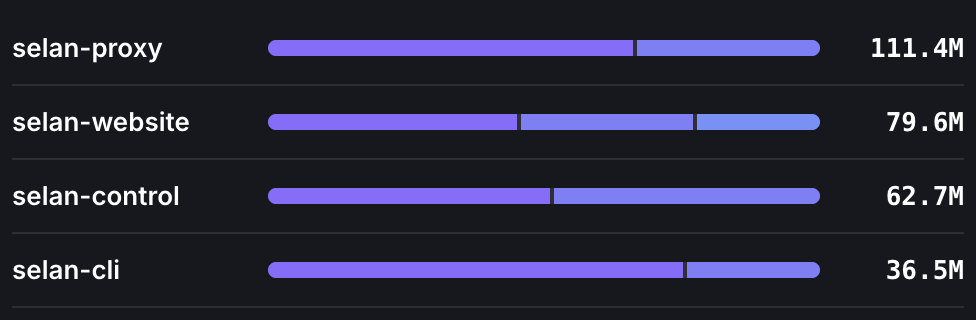
Hours by repository, each bar split by the people who were in it. Then the same hours by person. One answers where the work went, the other answers who was doing it.
- A duration here is how long a model was working for somebody, not how long they sat at a keyboard.
- What it records is the repository, who ran the session and what it cost.
- Never prompts, never transcripts, never tool names, never the files anybody touched.
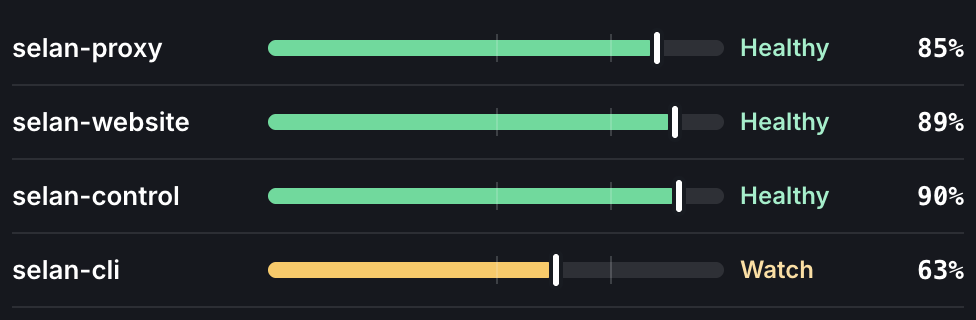
How much of the context was paid for twice.
Every request carries the conversation so far. When the model has seen that text before it comes back out of the cache, and when it has not, you pay to process it again. This says which repositories are on the wrong side of that.
- Healthy at 75% or better, Watch between 50 and 74, Poor below that, written beside the bar as well as coloured.
- Writing something into the cache costs about ten times what reading it back costs, so a repository that keeps missing is a repository quietly spending money.
- It is a property of that repository's context, not a score for the people in the section above.

Off until an owner turns it on.
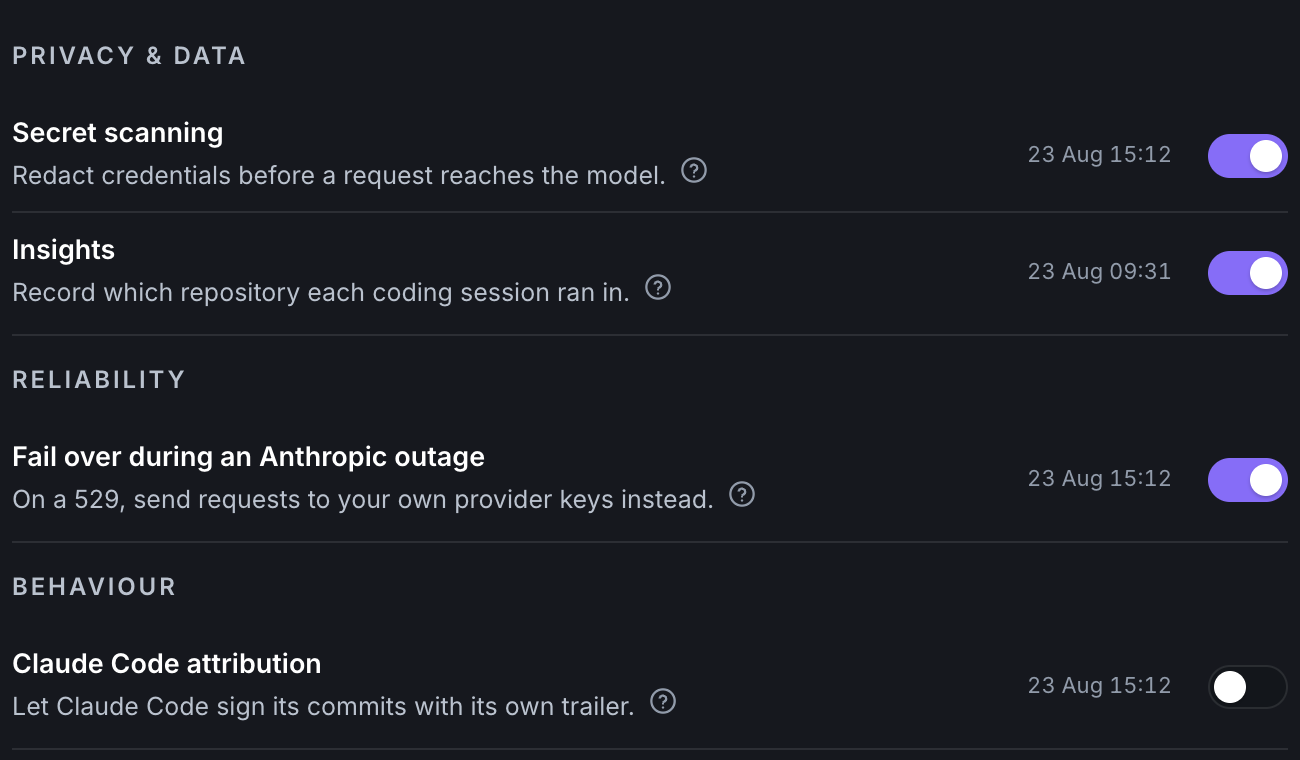
This is the part of Selan that looks closest to watching people, so it is the part that ships most firmly switched off. Nothing is collected until somebody at your company decides, and the decision is recorded with their name on it.
- The owner's view. Engineers can run the accounts without reading anybody else's week.
- Recording which repository a session belonged to is its own separate switch.
- Every switch carries the day it was moved, and who moved it.
- There is no backfill. The first day it collects is the day it was turned on, and not one day earlier.
How it works
- An owner turns it on. Until then this page is empty and nothing is being collected.
- Your team works as usual. Nothing to install, nothing to tag, nothing to fill in.
- You read the week by repository, by person, and by how much context came back out of the cache.
What to know
- This is not a productivity score, and we would rather you did not use it as one. It measures how long a model was working and how warm a repository's context was, which is a fact about the work, not about the person.
- The repository name is the name only. Never a path, never the contents.
- There is no backfill, so turning it on tells you about the weeks that follow, not the weeks that went before.
- The exact list of what is stored, and the one case where a provider's reply is written down, is on Trust.
The other three
Know what your team spends on AI
Every request costed with a person's name on it, and a limit you can set before the number grows.
UnifyOne company setup for every AI model
Connect the accounts you already pay for, give each person one sign-in, and decide which models they can reach.
ProtectStop secrets before they reach a provider
With scanning on, a key found in a request is replaced before that request is sent.
See one week of your own.
Turn it on, work for a week, and read what comes back. Free for up to three seats, and the Free plan needs no card.
Start for free